Tuesday, January 2, 2024
When Jesus is Born, Angels Tell the Local Shepherds 1st
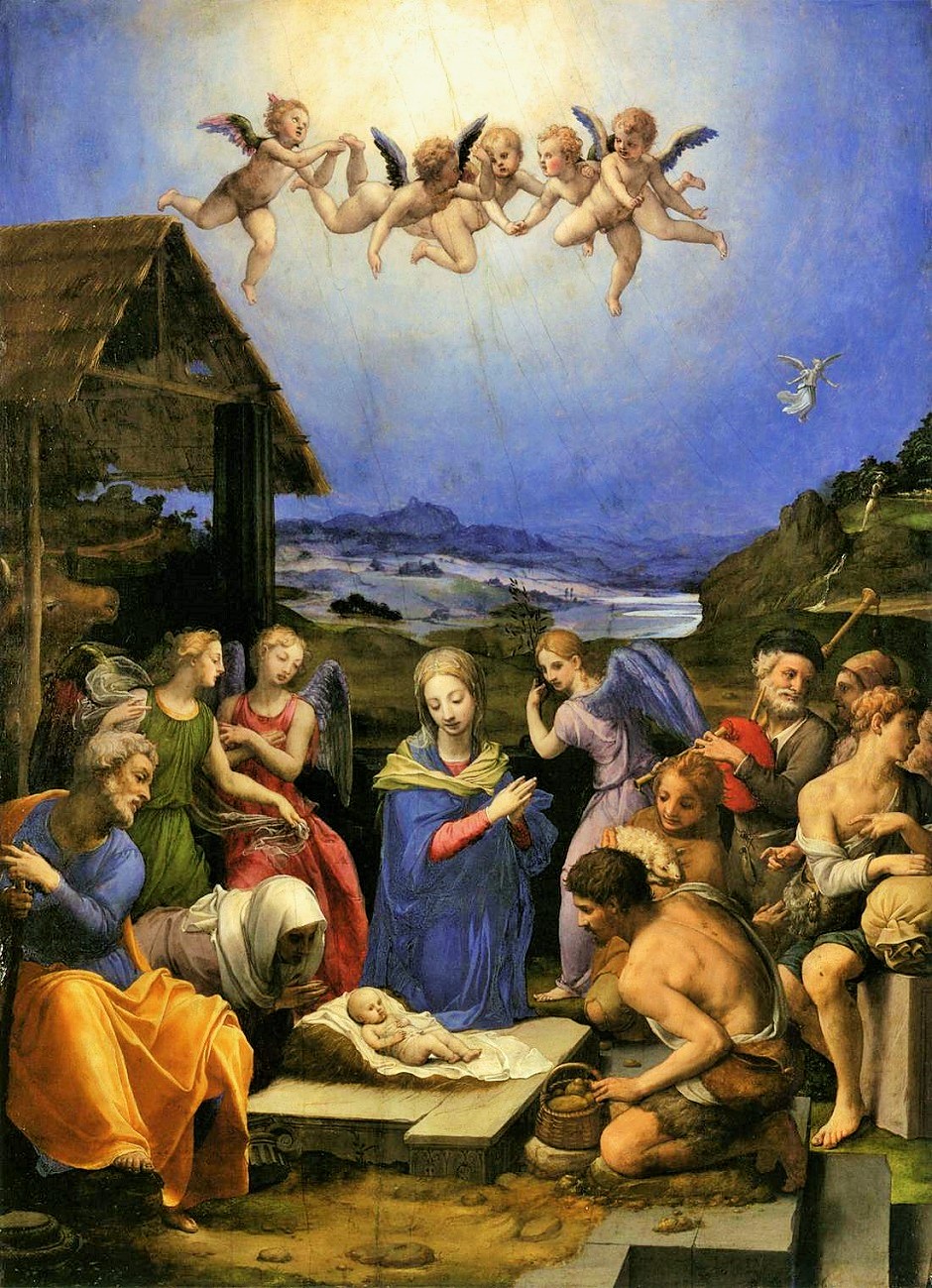
1500s The Adoration of the Shepherds
1590 The Adoration of the Shepherds
The shepherds said one to another, "Let's go to Bethlehem, now, and see this thing that has happened, which the Lord has made known to us." They came with haste, and found both Mary and Joseph, and the baby was lying in a manger. When they saw it, they publicized widely the saying which was spoken to them about this child. All who heard it wondered at the things which were spoken to them by the shepherds. But Mary kept all these sayings, pondering them in her heart. The shepherds returned, glorifying and praising God for all the things that they had heard and seen, just as it was told them. Luke 2:8-20
Trade Routes between Europe & Asia during Antiquity
The Silk Road, a series of ancient trade routes stretching across Central Asia to Europe, evokes exotic images of camel trains laden with bales of fine Chinese silk, spices, and perfume;, of desert oases surrounded by snow-capped mountains; of bustling markets thronging with travelers buying and selling grapes, coriander, Baltic amber, and Mediterranean coral. The silks & spices & incence evolved as ancient mankind experimented with the products of Nature. Along this route, silks were sent from China to ancient Rome; princesses were dispatched in marriage alliances across the deserts; bandits and thieves launched attacks throughout history. Spanning more than 5,000 years, the Silk Road was more than just a trade route, the Silk Road witnessed the movement of Man's cultural influences intermingled with Nature's changing landscapes.
Some areas had a monopoly on certain materials or goods. China, for example, supplied West Asia & the Mediterranean world with silk, while spices were obtained principally from South Asia. These goods were transported over vast distances— either by caravans & pack animals overland, or by seagoing ships—along the Silk & Spice Routes, which were the main arteries of contact between the various ancient empires of the Old World.
Another important trade route, known as the Incense Route, was controlled by the Arabs, who brought frankincense & myrrh by camel caravan from South Arabia. The demands for scents & incense by the empires of antiquity, such as Egypt, Rome & Babylon, made Arabia one of the oldest trade centers of the world.
Cities along these trade routes grew rich providing services to merchants who rested in oasis towns (known as a "caravanserai"). These centers served as international marketplaces, & areas where knowledge was also exchanged. Cities such as Palmyra & Petra, on the fringes of the Syrian Desert, flourished mainly as centers of trade supplying merchant caravans & policing the trade routes. They also became cultural & artistic centers, where peoples of different ethnic & cultural backgrounds could meet & intermingle.
14-1500s The Adoration of the Shepherds
Monday, January 1, 2024
Happy New Year! British Botanist celebrates Christmas & the New Year in 1790s America
Henrietta Liston (1751-1828) was a British botanist. The National Library of Scotland has digitized her journals. Henrietta married diplomat Robert Liston when she was 44, & he was 53, on 27 February 1796. After their wedding, they traveled directly down to London where Robert met with King George III, ahead of his posting to the United States in 1796.
They took up residence in Philadelphia, the capital. Genuinely curious about the New World, they began an extended trip from Philadelphia to Charleston, South Carolina in the fall of 1797. The couple also established friendships with George Washington & John Adams, of whom Henrietta's diaries contain favorable impressions. She also praises Alexander Hamilton, as "lively & animated in his conversation, gallant in his manners & sometimes brilliant in his sallies."
Henrietta documented their trip in her journal, noting facts that she found interesting, the foods they ate, & their astonishment at the natural beauties, particularly the flora, of the countryside. Traveling the east coast of North America must have been a challenge for the 45-year-old Mrs. Liston & her 55-year-old husband. She wrote: On Christmas eve, the Listons reached Fayetteville, named after the Marquis de Lafayette who had fought on the side of the Americans in the Revolutionary War. It is a flourishing Town, upon a Branch of the Capefear River & nearly at the head of the navigation—before the War it was called Cross Creek.
We were visited by a Scotch Gentleman, named Donaldson, with whose family we passed Christmas day very agreeably. No doubt they were happy to spend the day with a fellow Scot, but Mrs. Liston does not give any details of the festivities. However, she does describe a particular meal she & her husband enjoyed en route.
Our most frequent food, & infinitely the best of its kind, was Pork & Corn bread, it happened to be the Season for killing Pork, it was fresh & most excellent meat,...always broiled upon the Coals, & when we happened to get a few fryed Eggs to it, it was the best food possible & with Corn bread—no other is known—baked upon a hoe, in general, & call hoe cake.
On New Year’s Eve, Henrietta & her husband arrived in Charleston, South Carolina, where they spent a week before returning to Philadelphia, receiving “very marked attentions” from the “polished Society” that characterized Charleston.
A book on her diaries & journals The Travel Journals of Henrietta Marchant Liston: North America & Lower Canada, 1796-1800, edited by L.V. North was published in 2014.


+Adoration+of+the+Shepherds+b.jpg)
%2BAngel%2B1889.jpg)
.jpg)

%2BAdoration%2Bof%2Bthe%2BShepherds.jpg)